Fujifilm Instax Mini 9: Reliability, Flaws, and Longevity Analysis
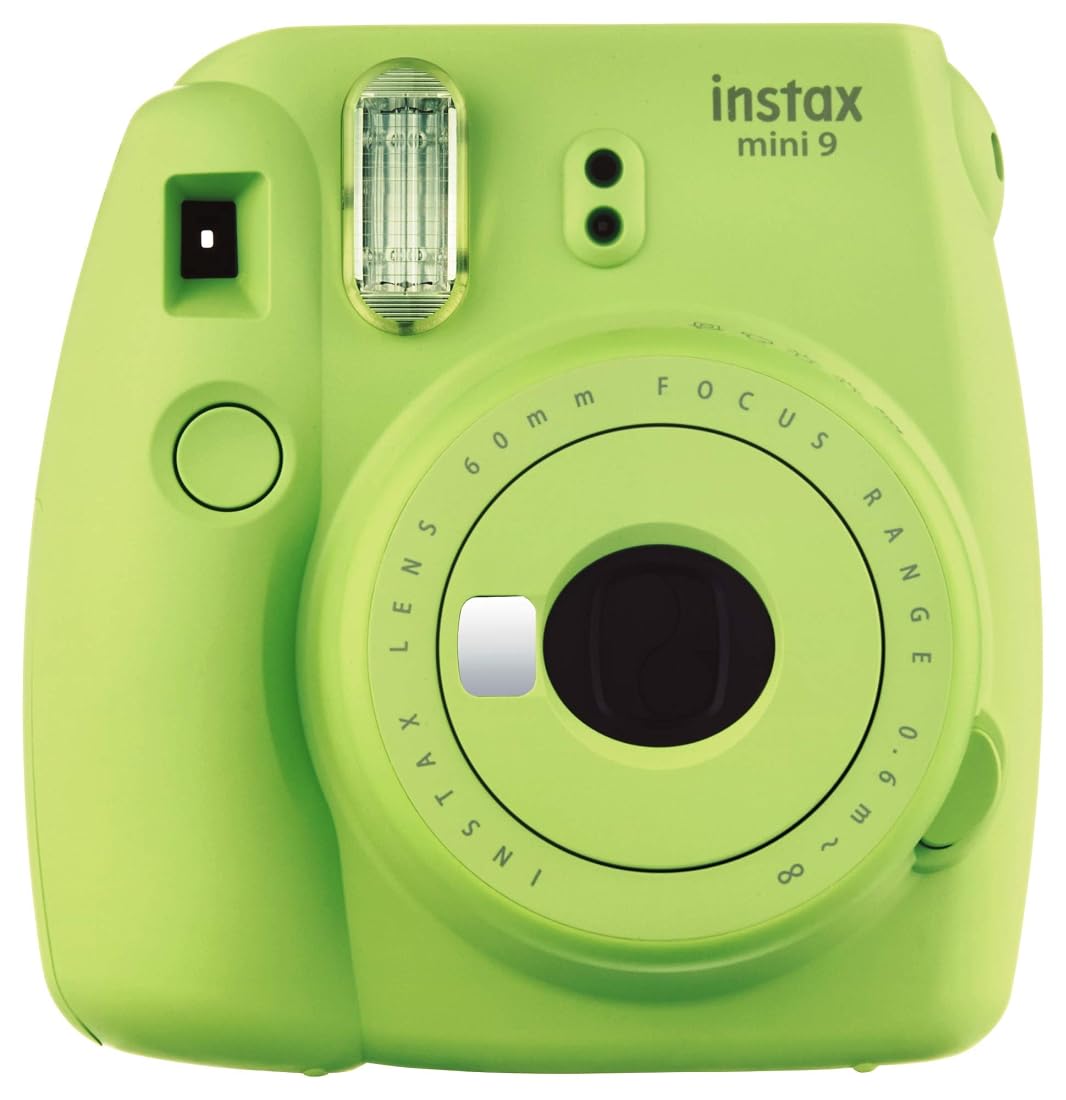
The Fujifilm Instax Mini 9 is an analog instant print camera engineered around proprietary instant film cartridges producing compact, physical 2.4-by-1.8-inch photographs. Frequently sought out by shoppers looking for an accessible polaroid camera fujifilm instax mini 9 style experience, this unit pairs an optical direct-view finder with an integrated electronic shutter and mechanical roller ejection…
As Amazon Associates, we earn from qualifying purchases. This means we may receive a small commission at no extra cost to you if you click through and make a purchase.
The Fujifilm Instax Mini 9 is an analog instant print camera engineered around proprietary instant film cartridges producing compact, physical 2.4-by-1.8-inch photographs. Frequently sought out by shoppers looking for an accessible polaroid camera fujifilm instax mini 9 style experience, this unit pairs an optical direct-view finder with an integrated electronic shutter and mechanical roller ejection system. Our reliability assessment shows that while the camera offers an approachable entry into chemical photography, its fixed shutter mechanism, battery-sensitive drive assembly, and fully manual aperture ring require careful user discipline to avoid ruined film packets and premature hardware failures.
This entry-level instant shooter primarily suits casual users, event hosts, and younger photographers who prioritize instant physical keepsakes over precision exposure controls. Serious hobbyists, travel photographers venturing into harsh climates, and individuals expecting automated exposure adjustments should explore higher-tier alternatives within the broader polaroid instax mini camera family, as this hardware offers zero margin for environmental exposure or low-voltage tolerance.
Fujifilm Instax Mini 9 spec sheet
| Film Compatibility | Fujifilm Instax Mini Film (10×2 format) |
|---|---|
| Print Dimensions | 2.4 inches x 1.8 inches image area |
| Shutter System | Electronic shutter rated at fixed 1/60 second |
| Exposure Measurement | Automatic sensor with manual LED aperture ring adjustment |
| Viewfinder | Optical direct-vision finder with 0.37x magnification |
| Focusing Range | Standard fixed focus with snap-on 35cm to 50cm macro adapter |
| Power Architecture | Two AA 1.5V alkaline batteries |
| Water Resistance | Not water resistant |
Every field from the listing (39)
| 0 | Features, Auto Exposure |
|---|---|
| 1 | Film Format, 10×2 |
| 2 | Film Color Type, Lime Green |
| 3 | Compatible Devices, camera |
| 4 | Viewfinder Magnification, 0.37x |
| 5 | Maximum Shutter Speed, 1/60 seconds |
| 6 | Shutter Type, Electronic |
| 7 | Compatible Camera Film Format Type, Instax Mini |
| 8 | Exposure Control, Automatic |
| 9 | Screen Size, 2.4 inches |
| 10 | Color, Lime Green |
| 11 | Effective Still Resolution, 1 mp |
| 12 | File Format, Instax Mini |
| 13 | Media Type, ProductImage |
| 14 | Shooting Modes, Macro |
| 15 | Viewfinder, Optical viewfinder |
| 16 | Water Resistance Level, Not Water Resistant |
| 17 | Brand, Fujifilm |
| 18 | Built-In Media, 2 – AA batteries, Camera, close up lens, instruction maual, wrist strap |
| 19 | Model Name, Fujifilm Instax Mini 9 Instant Camera – Lime Green |
| 20 | Unit Count, 1 Count |
| 21 | UPC, 074101033120 |
| 22 | Number of Packs, 1 |
| 23 | Global Trade Identification Number, 00074101033120, 07109155341402 |
| 24 | Manufacturer, Fujifilm |
| 25 | Warranty Description, 1 year |
| 26 | Manufacturer Part Number, Instax Mini 9 – Lime Green |
| 27 | Model Number, Instax Mini 9 – Lime Green |
| 28 | Model Series, Instax Mini |
| 29 | Number of Items, 1 |
| 30 | Best Sellers Rank, #7,905 in Electronics (See Top 100 in Electronics) #32 in Instant Film Cameras |
| 31 | ASIN, B06X9C2696 |
| 32 | Item Weight, 0.4 kg |
| 33 | Item Dimensions, 3 x 5 x 5.5 inches |
| 34 | Special Feature, Auto Exposure |
| 35 | Film Format Type, 10×2 |
| 36 | Item dimensions L x W x H, 3 x 5 x 5.5 inches |
| 37 | Included Components, 2 – AA batteries, Camera, close up lens, instruction maual, wrist strap |
| 38 | Film Color, Lime Green |
Quoted from the product listing. We did not measure these figures.
01Exposure Metering System and Optical Flaws
The primary source of user frustration with this camera stems from its hybrid metering and manual execution system. The hardware incorporates an automated light sensor positioned above the lens barrel that continuously reads ambient luminance. However, the camera does not adjust its mechanical aperture internally; instead, it illuminates an LED above one of five manual icons on the lens barrel ring. If the photographer fails to rotate the dial to the LED recommendation, the shutter fires using whichever aperture was previously selected, routinely creating severely overexposed or completely black frames.
Compounding these operational fujifilm instax mini 9 exposure flaws is the uncompromising electronic shutter locked at a constant 1/60 of a second. Because the shutter cannot speed up to 1/250 or 1/500 second in harsh midday sun, outdoor scenes shot on high-reflectance surfaces frequently blow out highlights even at the smallest aperture setting. Conversely, indoor shooting without sufficient room lighting forces heavy reliance on the built-in flash, which fires on every single exposure regardless of ambient conditions. The High-Key mode intentionally softens and brightens portraits, but selecting it outdoors under clear skies guarantees a washed-out, unusable exposure.
Framing precision presents another hurdle due to the 0.37x magnification optical viewfinder. Because the viewfinder sits offset from the primary lens axis, parallax error becomes pronounced on closer subjects. Fujifilm provides a snap-on macro lens adapter for subjects positioned between 35 and 50 centimeters, but using this optical attachment requires the shooter to mentally adjust the composition down and to the right. Misjudging this compensation ruins framing, which is especially costly when shooting larger formats or comparing outcomes against modern alternatives such as the fujifilm instax square instant camera platform.
02Film Ejection Mechanics and Jamming Risks
Instant print delivery relies on an electromechanical pick arm that physically pushes the top sheet from the film cartridge into a pair of motorized steel compression rollers. Issues with instax mini 9 film jamming usually manifest right after the shutter button is depressed, when the camera must execute both the chemical pod bursting and physical sheet ejection in a single cycle. If the internal plastic drive gears experience resistance from a poorly seated cartridge or warped film casing, the sheet stalls midway through the top ejection slot, ruining both that frame and the light integrity of the remaining pack.
Chemical development occurs inside the frame border via small reagent pods ruptured by the rollers during exit. When investigating fujifilm instax mini 9 common problems, roller contamination ranks near the top. Dust, grit, or dried developer gel sticking to these internal steel pins causes repeating blank spots or physical scratches down the vertical length of subsequent photographs. Because the film door lacks a user-serviceable roller access latch, cleaning these rollers requires operating the shutter without film or carefully swabbing through the ejection gate with alcohol-free tools.
Physical interference during the ejection cycle is another major failure trigger. Users must refrain from pulling, tugging, or bending the plastic film sheet while the motor is active. Pulling the print ahead of the mechanical feed cycle strips the nylon drive cogs inside the chassis, creating a permanent mechanical malfunction where the motor spins freely without engaging the ejection teeth.
03Power Delivery Architecture and Battery Reliability
Operating entirely on two AA alkaline cells, the camera features an integrated flash capacitor that draws substantial peak current after every shot. Widespread instax mini 9 battery issues often arise not from complete cell depletion, but from voltage drops below the threshold required to charge the high-voltage flash circuit. When battery voltage dips, all four exposure LEDs around the lens barrel begin blinking rapidly in unison, locking the electronic shutter mechanism and halting all camera operations.
The device does not tolerate zinc-carbon or partially depleted mixed-brand cells. Because the electronic shutter and mechanical motor draw power from the same dual-cell circuit, tired batteries frequently fail during the middle of an ejection stroke, leaving half-ejected film stuck in the rollers. Standard high-capacity 1.5V alkaline batteries provide the most stable discharge profile, whereas budget rechargeable options exhibiting lower nominal cell voltages (such as standard 1.2V NiMH chemistries) can cause false low-battery lockouts even when holding substantial residual energy.
Long-term storage introduces severe corrosion vulnerabilities. The spring-loaded battery contacts inside the grip chamber lack protective plating against alkaline electrolyte leakage. If the camera sits dormant in a closet with depleted cells for months, corroded contacts develop high electrical resistance, resulting in immediate flash failure even after fresh batteries are inserted. Periodic contact inspection and cell removal prior to storage are essential preventative maintenance steps.
04Chassis Durability and Hardware Reliability
Constructed primarily from lightweight molded thermoplastic, the camera exterior emphasizes approachable aesthetics over impact resistance. The official fujifilm instax mini 9 durability rating does not include shock resistance or weatherproofing, categorizing the unit explicitly as not water resistant. Exposing the camera to light rain, beach mist, or heavy humidity can quickly compromise the open optical viewfinder and short-circuit the flash charging board housed directly behind the front panel.
The collapsible lens barrel serves as the primary power switch: pressing the front deployment button mechanically pops the lens outward and engages the electrical contacts to energize the metering LEDs. Over time, drops or side impacts on the extended barrel misalign the plastic guide rails, causing the lens assembly to bind during extension or retraction. If the barrel fails to lock firmly into its forward stop, the internal power contacts remain open, rendering the camera completely dead.
From an ownership longevity standpoint, instax mini 9 warranty support is typically bounded by strict regional manufacturer terms that exclude accidental drops, liquid penetration, and gear damage caused by manual film extraction. Because the unit is assembled using sealed plastic clips and proprietary subassemblies, third-party repair is economically impractical. Buyers seeking advanced hybrid functionality or sturdier mechanical platforms frequently compare these raw fujifilm instax mini 9 specs against digital-analog crossovers like the instax wide evo hybrid instant camera to minimize ongoing mechanical risks.
The verdict
Fujifilm Instax Mini 9
9.4/10
Buyer score
Overwhelmingly positive
Average star rating left by Amazon buyers, doubled to a 10-point scale. It is not a score we gave the product.
Determining whether the camera represents a dependable investment comes down to how well its operational quirks align with your photography habits. For users questioning is fujifilm instax mini 9 worth it, the answer depends entirely on your willingness to operate within its strict mechanical boundaries. As a purely analog tool, it delivers distinct, nostalgic physical prints that digital alternatives cannot match, provided the photographer conscientiously aligns the aperture dial to the flashing LED and uses fresh, high-draw alkaline batteries.
However, cautious buyers must recognize the inherent vulnerabilities built into its low-cost construction. The combination of an unsealed plastic chassis, fixed 1/60-second shutter, non-defeatable flash, and delicate ejection rollers means a single drop or battery voltage sag can spoil an entire cartridge of film. If you respect its light limitations and handle the mechanical lens extension with care, this instant camera remains an enjoyable, functional keepsake maker.
Pros
- Integrated selfie mirror for framing
- Snap-on macro lens adapter included
- Simple LED-guided exposure suggestions
- Widely available AA battery power
- High-Key mode for soft portraits
Cons
- Rigid fixed 1/60-second shutter speed
- No weather sealing or water resistance
- Manual dial must match flashing LED
- Flash fires on every shot
Buy it if
- You need a dedicated party or event camera tailored specifically for instant, physical mementos.
- You are purchasing an instax mini 9 for beginners who appreciate tactile dial controls and immediate feedback.
- You primarily shoot social portraits in balanced natural light or controlled indoor settings where the integrated selfie mirror and macro adapter add practical value.
- You prefer standard, widely available AA alkaline batteries over proprietary lithium packs that require dedicated charging cables.
Skip it if
- You shoot in harsh weather, maritime environments, or dusty outdoor settings without protective enclosures.
- You want automated shutter speeds that adapt seamlessly to bright sun without blowing out highlights.
- You dislike manual aperture dial matching and prefer fully automated point-and-shoot camera hardware.
See it on AmazonAffiliate link. Price and stock change at Amazon, not here.
Questions buyers ask
Why are all the lights flashing on the Fujifilm Instax Mini 9?
All four aperture LEDs flash simultaneously when the internal circuitry detects insufficient battery voltage to charge the electronic flash capacitor. This lockout disables the shutter to prevent film from stalling inside the drive rollers. Replacing both AA cells with a brand-new pair of identical, high-quality 1.5V alkaline batteries resolves the error in the vast majority of cases.
How do you clear a film jam without ruining the entire pack?
If a print jams during ejection, do not force the film door open in bright light, as this exposes the remaining photographic sheets to ambient light and ruins them. Move into a completely dark room or light-tight changing bag, open the rear film door, gently extract the jammed frame from the roller entrance, and close the door securely before returning to normal lighting.
Can you turn off the flash on the Fujifilm Instax Mini 9?
The built-in electronic flash fires automatically on every shot and cannot be disabled through any switch or menu setting. Because the electronic shutter is fixed at 1/60 second, the camera relies on the flash to deliver consistent baseline exposure across varied indoor and shaded environments.
Is the Fujifilm Instax Mini 9 waterproof or weather resistant?
The camera features no water resistance or environmental sealing. Exposure to rainfall, splashes, high humidity, or fine sand can corrode internal electrical switches, ruin the battery bay contacts, or clog the mechanical gear teeth that power the ejection rollers.
What does the included macro lens adapter do?
The snap-on macro lens adapter modifies the focal length of the standard lens, enabling clear focus on subjects positioned between 35 and 50 centimeters away. It is primarily used for close-up portraits and macro photography, reducing the blurriness that occurs when shooting close subjects on the standard fixed-focus optic.
How this review was put together
- Specs are quoted from the Amazon listing, not measured in a lab.
- The score is the average star rating left by Amazon buyers, doubled to a 10-point scale.
- Prices were read from the listing when this page was last built and move without notice.
- Buyer quotes are reproduced word for word, with the name and date shown.
199 reviews · 1,445 rated products · 87 brands tracked
We earn a commission when you buy through our Amazon links. That never changes a score, because we do not set the scores.


