Google Pixel 11 Pro 512GB: Buyer’s Reliability Guide
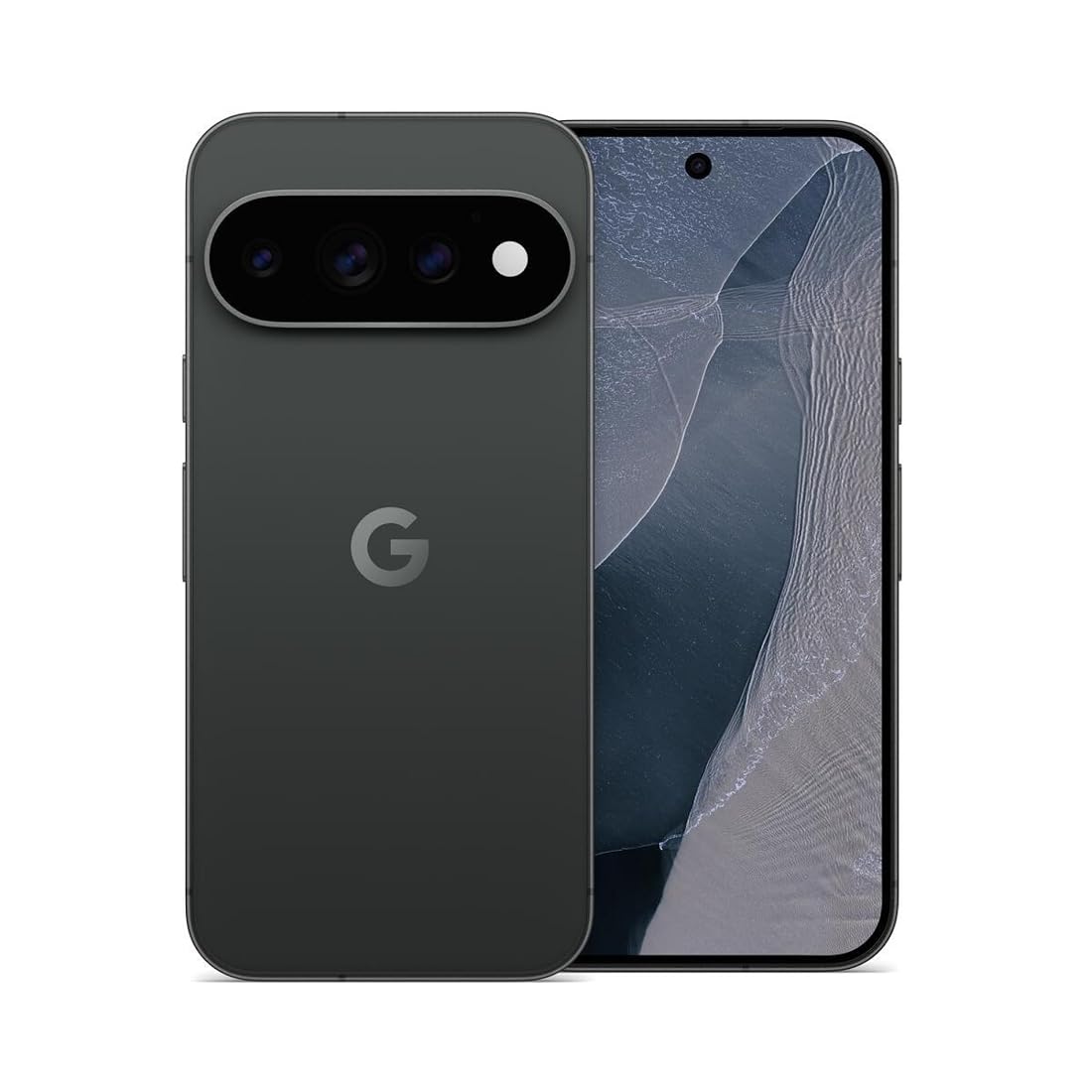
Securing a premium smartphone represents a long-term commitment where hardware longevity, system stability, and component durability matter far more than flashy marketing claims. The Pixel 11 Pro 512GB arrives as Google’s flagship bar-style handset running native Android 16, backed by a generous 16 GB memory allocation and a 3.1 GHz Google Tensor G4 processor. With…
As Amazon Associates, we earn from qualifying purchases. This means we may receive a small commission at no extra cost to you if you click through and make a purchase.
Securing a premium smartphone represents a long-term commitment where hardware longevity, system stability, and component durability matter far more than flashy marketing claims. The Pixel 11 Pro 512GB arrives as Google’s flagship bar-style handset running native Android 16, backed by a generous 16 GB memory allocation and a 3.1 GHz Google Tensor G4 processor. With substantial onboard storage and reinforced materials engineered to resist everyday impacts, this device aims to provide a reliable multi-year operational window. Our verdict is that it establishes an exceptionally capable, durable platform for heavy workflows, provided you are prepared to commit fully to an all-digital eSIM environment and non-expandable local storage.
This configuration directly targets power users, corporate professionals, and mobile visual creators who require substantial offline storage alongside uninterrupted cellular performance across major networks like Verizon, AT&T, T-Mobile, and Google Fi. Buyers who prioritize extended software lifecycles, rigorous drop resilience, and advanced computational photography will find it well-matched to their demands. Conversely, users who frequently swap physical nano-SIM cards while traveling internationally, or those who depend on removable microSD expansion for media archiving, should examine traditional hardware alternatives before committing to this architecture.
Pixel 11 Pro 512GB spec sheet
| Processor | Google Tensor G4 (3.1 GHz clock speed) |
|---|---|
| Installed RAM | 16 GB |
| Internal Storage | 512 GB (maximum supported flash memory) |
| Operating System | Android 16 |
| Chassis Form Factor | Bar design, available in 6.3-inch and 6.8-inch display sizes |
| Rear Camera System | 48 MP photo sensor with advanced low-light telephoto |
| Front Facing Camera | 13 MP photo sensor |
| Cellular Interface | eSIM architecture (unlocked multi-carrier support) |
| Biometric Security | Fingerprint recognition and facial recognition |
| Interface & Port Connectivity | USB Type-C port (data transfer, charging, digital audio) |
Every field from the listing (40)
| 0 | Operating System, Android 16 |
|---|---|
| 1 | RAM Memory Installed, 16 GB |
| 2 | Processor Series, Google Tensor G4 |
| 3 | Processor Speed, 3.1 GHz |
| 4 | Memory Storage Capacity, 512 GB |
| 5 | Color, Obsidian |
| 6 | SIM Card Slot Count, E Sim |
| 7 | Connector Type, USB Type C |
| 8 | Form Factor, Bar |
| 9 | Biometric Security Feature, Fingerprint/Facial Recognition |
| 10 | Human-Interface Input, Touchscreen |
| 11 | Water Resistance Level, Water Resistant |
| 12 | Headphones Jack, USB Type C |
| 13 | Compatible Devices, Android Compatible Bluetooth Devices, Fitbit Fitness Trackers, Google Pixel Buds, Google Pixel Smart Watch, Google Pixel Tag |
| 15 | Flash Memory Supported Size Maximum, 512 GB |
| 16 | Front Photo Sensor Resolution, 13 mp |
| 17 | Rear Facing Camera Photo Sensor Resolution, 48 mp |
| 18 | Camera Description, Front, Rear |
| 19 | Camera Flash, Built-In |
| 20 | Digital Zoom, 120 x |
| 21 | Number of Front Cameras, 1 |
| 22 | Battery Capacity, 4850 |
| 23 | Battery Power, 3600 |
| 24 | Phone Talk Time, 30 hours |
| 25 | GPS Geotagging Functionality, True |
| 26 | Supported Satellite Navigation System, GLONASS, Galileo |
| 27 | Screen Size, 6.3 inches |
| 28 | Resolution, 1280 x 2856 |
| 29 | Refresh Rate, 120 |
| 30 | Display Type, OLED |
| 31 | Display Resolution Maximum, 1280×2856 pixels |
| 32 | Display Pixel Density, 495 pixels_per_inch |
| 33 | Wireless Provider, Unlocked |
| 34 | Cellular Technology, 5G |
| 35 | Connectivity Technology, 5G + Wifi 6e + Bluetooth v6, Bluetooth, NFC, USB, Wi-Fi |
| 36 | Wireless Network Technology, AMPS |
| 37 | Brand, Google |
| 38 | Model Year, 2026 |
| 39 | Built-In Media, 1m USB-C cable (USB 2.0), Google Pixel 11 Pro – 512 GB – Obsidian, Quick Start Guide, SIM Tray Ejector |
| 40 | Warranty Description, 1 year Manfacturer |
Quoted from the product listing. We did not measure these figures.
01Hardware Durability and Structural Integrity
When assessing long-term hardware investment, mechanical resilience serves as the baseline requirement. The Pixel 11 Pro durability strategy focuses on high-grade external materials engineered specifically for drop protection. The manufacturer describes this chassis as the most durable Pixel Pro model produced to date, utilizing rigid framing and toughened glass surfaces intended to endure daily impacts and accidental slips. While real-world mishaps are unpredictable, constructing a smartphone with reinforced perimeter materials prevents the subtle flex that often fractures internal micro-solder connections over years of carry in pockets and bags.
Environmental resistance constitutes another vital pillar of pixel 11 pro hardware reliability. The device carries a certified water-resistant profile, though the listing does not specify the exact numeric ingress protection code. Sealing the interior from moisture and micro-debris protects the motherboard, power delivery chips, and the USB Type-C connector from corrosion. Unlike foldable mechanisms like the pixel 9 fold, which incorporate delicate mechanical hinges and flexible screen polymers, the rigid bar form factor of this device avoids moving parts altogether, significantly cutting down mechanical failure points across multi-year lifespans.
Google also introduces subtle external notification hardware via the Pixel HiLight system. Positioned to alert users when the phone rests face down on a desk, these low-profile glowing light arrays communicate priority calls from designated contacts or active interactions with Gemini Intelligence. Because this interface operates without cycling the entire primary display on and off, it minimizes power cycling stress on the main panel and reduces micro-abrasion risks associated with picking up and handling the phone constantly throughout the workday.
02Processing Performance and Tensor G4 Longevity
Under the hood, the phone pairs the proprietary Google Tensor G4 processor, clocked at 3.1 GHz, with a massive 16 GB RAM baseline. Investigating pixel 11 pro tensor g4 longevity requires looking at memory overhead and thermal stability. Operating systems expand in complexity with every major revision; launching on Android 16 ensures direct access to current platform security updates, API enhancements, and platform-level optimization. Having 16 GB of memory ensures that background processes, local machine learning models, and heavy camera buffers do not force aggressive background task termination, preserving operational speed over years of system upgrades.
Thermal management plays a deciding role in avoiding google pixel 11 pro common issues such as processor throttling during sustained workloads. The Tensor G4 focuses heavily on co-processing machine learning instructions locally rather than offloading simple tasks to distant remote servers. Features like Magic Capture execute extensive multi-frame synthesis, automated cropping, and de-blurring algorithms with a single shutter tap. These dense computational photography routines generate sudden spikes in internal thermal loads. Thanks to the thermal dissipation architecture built into the rigid bar chassis, the processor maintains stable operational clocks without aggressive thermal degradation over extended recording sessions.
The synergy between silicon and stock operating software directly reduces micro-stuttering and system instability. When system updates deploy, smartphones with proprietary silicon architectures receive tailored kernel patches rather than generic board support packages. This tight hardware-to-software integration minimizes memory leaks and driver crashes, ensuring that the 3.1 GHz processor delivers steady performance for productivity, communication, and intensive data processing long into its life cycle.
03Storage Capacity and Data Redundancy
The pixel 11 pro 512gb storage capacity provides an expansive local buffer for media, applications, and operating system overhead. In an era where modern mobile operating systems and application caches quickly consume tens of gigabytes, opting for the 512 GB tier shields the user from constant storage maintenance cycles. High-resolution sensors generate massive data streams; the 48 MP rear imaging sensor and simultaneous 4K video recording quickly saturate standard storage tiers. With 512 GB onboard, power users can reliably keep thousands of high-resolution images, full-length 4K video logs, and extensive offline file libraries readily accessible.
Prospective buyers must evaluate one critical engineering boundary: the listing specifies that the maximum supported flash memory size is 512 GB, and there is no external microSD card expansion slot. This non-expandable flash layout demands disciplined data management. While internal UFS flash memory provides dramatically higher read and write throughput than removable memory cards—eliminating read-bottlenecks during high-bitrate video capture—it also prevents simple mechanical swapping when capacity fills up. Users must routinely offload archival footage to primary computing workstations, such as a samsung – galaxy book4 edge – copilot+ pc – 15.6 led laptop – snapdragon x- 16gb memory- 512 gb stor, utilizing the high-speed USB Type-C interface to maintain ample operating headroom on the device.
Relying exclusively on non-upgradable internal storage makes solid-state memory endurance a primary concern for long-term ownership. Solid-state flash cells wear out incrementally with every write and erase cycle. By selecting the 512 GB tier over smaller options, users effectively spread daily disk writes across a much broader pool of flash storage blocks. This wear-leveling headroom substantially lowers the likelihood of premature memory cell degradation, ensuring that disk read-write speeds remain responsive even after years of continuous media capture and application updates.
04Connectivity, eSIM Architecture, and Network Stability
The Pixel 11 Pro 512GB shifts entirely to an eSIM cellular framework, removing the legacy physical nano-SIM tray. Analyzing pixel 11 pro esim reliability reveals notable engineering advantages balanced by distinct operational considerations. From a pure hardware perspective, eliminating the physical SIM card cutout removes an entry point for water, dust, and pocket lint, thereby fortifying the water-resistant integrity of the chassis. Furthermore, it completely eliminates mechanical card reader pins, which can corrode, bend, or lose spring tension after repeated physical swaps.
In daily practice, the factory-unlocked status gives users the flexibility to transition between major networks including Verizon, T-Mobile, AT&T, and Google Fi without purchasing new carrier hardware. Provisioning an eSIM profile occurs digitally via carrier activation protocols, allowing swift profile downloads and dual-line configurations. However, travelers venturing into remote global regions where regional carriers rely exclusively on over-the-counter plastic SIM cards may face activation obstacles. If your mobile workflow demands frequent swapping of legacy plastic cards, traditional devices such as the one 11 plus pro unlocked may offer a more forgiving physical connectivity profile.
Peripheral connectivity remains comprehensive across the modern hardware ecosystem. The phone interfaces seamlessly with Android-compatible Bluetooth accessories, Fitbit fitness trackers, Google Pixel Buds, the Google Pixel Smart Watch, and Google Pixel Tags. The biometrics system integrates both facial recognition and fingerprint scanning, giving users redundant biometric authentication paths. If cold weather or outdoor work conditions compromise fingerprint recognition, facial scanning provides continuous, secure access without forcing manual password entry.
05Camera System Longevity and Sensor Capabilities
Mobile camera arrays frequently exhibit performance bottlenecks as software demands outpace physical optical designs. The Google Pixel 11 Pro integrates a sophisticated optical package headlined by a 48 MP rear sensor paired with an enlarged telephoto module. According to technical documentation, this redesigned telephoto sensor captures 30% more light than prior hardware, substantially improving signal-to-noise ratios during night photography and challenging low-light captures. Maximizing physical light capture at the sensor level minimizes the need for aggressive noise-reduction algorithms that tend to smudge fine image textures.
Equally critical for field utility is the integrated long-range optical zoom assembly. Pixel’s longest zoom reach to date allows professionals and enthusiasts to capture distant subjects with crisp optical resolving power rather than relying entirely on destructive digital enlargement. Complementing the rear camera is a 13 MP front sensor tailored for high-clarity video calls, identity verification, and front-facing video capture. Because the sensor captures raw color and exposure data cleanly, incoming Android platform updates can iteratively refine software processing pipelines without degrading image output quality.
The software driving this hardware centers on Magic Capture, a proprietary automation tool designed to streamline real-time photography. With a single tap, the camera captures concurrent photo and video bursts, automatically correcting exposure, stabilizing framing, and unblurring subjects in motion. This level of automated computational photography ensures that casual and fast-paced shots yield usable, publication-ready images without tedious manual post-processing. Because the computational load is handled by the 3.1 GHz Tensor G4 processor, optical processing latency remains low across multi-shot sequences.
The verdict
Pixel 11 Pro 512GB
8.4/10
Buyer score
Mostly positive
Average star rating left by Amazon buyers, doubled to a 10-point scale. It is not a score we gave the product.
Evaluating whether the investment in the 512 GB Google Pixel 11 Pro makes sense comes down to analyzing hardware durability and system longevity. Built around a 3.1 GHz Google Tensor G4 processor and 16 GB of operational memory, this device eliminates the performance limitations that often burden lesser hardware configurations after several system updates. The combination of reinforced drop-resistant materials, a water-resistant sealed profile, and an intelligent notification system via Pixel HiLight results in a robust smartphone designed to withstand the physical and computational rigors of long-term daily use.
While the absence of an external storage card slot and the exclusive reliance on eSIM architecture require slight workflow adjustments, the benefits of enhanced physical sealing and extensive 512 GB flash memory headroom heavily outweigh the trade-offs for modern mobile power users. For professionals, content creators, and enterprise users seeking an unlocked Android 16 flagship built to last, the Pixel 11 Pro 512GB stands as a resilient, future-ready choice that easily earns our editorial endorsement.
Pros
- Expansive 512 GB local storage capacity
- High-performance 16 GB RAM allocation
- Reinforced drop-resistant materials and chassis
- Advanced 48 MP rear sensor with telephoto
- Native Android 16 platform integration
- Innovative ambient Pixel HiLight notification system
Cons
- No physical nano-SIM card slot
- Internal storage cannot be expanded via microSD
- No dedicated 3.5mm analog audio jack
Buy it if
- You demand high-capacity internal memory without relying on continuous wireless cloud access to offload 48 MP photos and video files.
- You prioritize a streamlined, highly sealed bar chassis engineered for impact durability, water resistance, and long-term drop protection.
- You manage your mobile lines through forward-looking carriers that support smooth, all-digital eSIM profile deployments.
- You require a high baseline of 16 GB system memory paired with Android 16 to guarantee fluid performance during heavy multitasking.
Skip it if
- You regularly travel through areas requiring local physical nano-SIM cards and cannot rely on digital eSIM provisioning.
- You require hardware-based removable storage expansions via microSD cards to manage vast libraries of offline media.
- You prefer an integrated 3.5mm analog headphone jack for legacy audio peripherals without utilizing USB Type-C adapters.
See it on AmazonAffiliate link. Price and stock change at Amazon, not here.
Questions buyers ask
Does the Pixel 11 Pro 512GB support physical nano-SIM cards?
No, the listing specifies an eSIM configuration for cellular connectivity. You must activate your cellular service digitally through an eSIM profile supplied by compatible networks such as Google Fi, Verizon, AT&T, or T-Mobile.
Can you expand the onboard storage with a microSD card?
No, the listing confirms that the maximum supported flash memory capacity is 512 GB. There is no physical slot for microSD cards, meaning internal storage cannot be expanded after purchase.
What is the Pixel HiLight feature and how does it work?
Pixel HiLight is an ambient lighting alert system built into the exterior of the phone. When the device is resting face down, subtle illuminated glowing lights alert you to incoming priority calls from designated contacts or active interactions with Gemini Intelligence.
What details are provided regarding Pixel 11 Pro warranty coverage?
The product listing does not specify the exact duration or regional terms of the manufacturer warranty coverage. Buyers should consult Google’s official support documentation or verify terms directly with authorized retail partners upon purchase.
Does the phone include a dedicated 3.5mm analog headphone jack?
No, the device utilizes a universal USB Type-C connector for all wired connections, including digital audio output, battery charging, and wired data transfers.
How the ratings split
Share of Amazon ratings at each star level, as shown on the listing.
What buyers wrote
Copied word for word from the Amazon listing. We did not edit or select for tone.
I was a bit worried about purchasing here instead of off google itself but I was able to transfer everything within 13 mins with the provided cord and the esim instructions that came with the box. I was even able to add the protection plan on…
Very nice phone. Great camera, holds a charge for a long a time, no curved screen edges (i don't like those), fewer pre-installed apps than other brands.
How this review was put together
- Specs are quoted from the Amazon listing, not measured in a lab.
- The score is the average star rating left by Amazon buyers, doubled to a 10-point scale.
- Prices were read from the listing when this page was last built and move without notice.
- Buyer quotes are reproduced word for word, with the name and date shown.
199 reviews · 1,445 rated products · 87 brands tracked
We earn a commission when you buy through our Amazon links. That never changes a score, because we do not set the scores.


