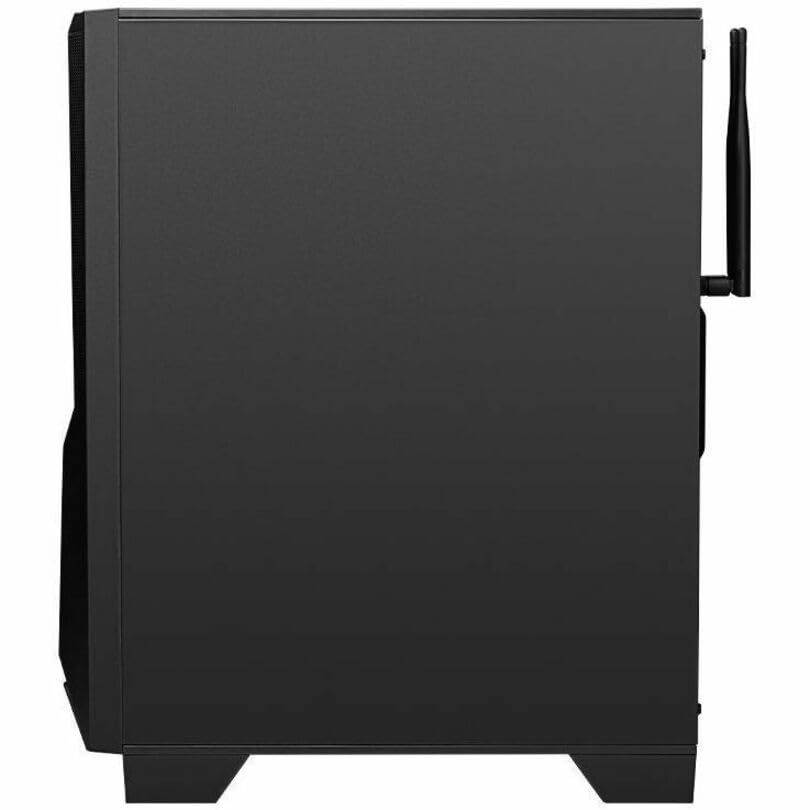
Synology DiskStation DS224+ Review: Long-Term Reliability Analysis
The Synology DS224+ is a compact two-bay network-attached storage solution equipped with an Intel Celeron J4125 quad-core processor, 6GB of DDR4 memory, and 8TB of pre-installed SATA storage running the proprietary DiskStation Manager operating system. Engineered to provide centralized file management, continuous automated backups, and private cloud synchronization, this compact desktop server delivers reliable baseline…

As Amazon Associates, we earn from qualifying purchases. This means we may receive a small commission at no extra cost to you if you click through and make a purchase.
The Synology DS224+ is a compact two-bay network-attached storage solution equipped with an Intel Celeron J4125 quad-core processor, 6GB of DDR4 memory, and 8TB of pre-installed SATA storage running the proprietary DiskStation Manager operating system. Engineered to provide centralized file management, continuous automated backups, and private cloud synchronization, this compact desktop server delivers reliable baseline storage with integrated data protection features for environments that cannot afford unexpected downtime.
This server suits solo professionals, remote branch offices, and small workgroups seeking dependable local storage with snapshot recovery and physical network redundancy. However, creative teams demanding ultra-high-speed multi-gigabit video streaming or enterprises requiring deep multi-drive pool expansion should bypass two-bay enclosures and evaluate larger platforms like the synology ds925+ 4 bay nas.
Synology DS224+ spec sheet
| Processor | Intel Celeron J4125 4-Core (2.0 GHz base, up to 2.7 GHz turbo) |
|---|---|
| Memory | 6GB DDR4 non-ECC SODIMM |
| Storage Included | 8TB (2 x 4TB) 6Gb/s SATA hard drives |
| Drive Bays | 2 bays (sealed box configuration) |
| Supported Internal File Systems | Btrfs, EXT4 |
| Network Ports | 2 x RJ-45 1GbE LAN ports (Link Aggregation and Failover) |
| Peripheral Interfaces | 2 x USB 3.2 ports |
| Power Architecture | Single power supply (operational draw as low as 15W) |
| Enclosure Construction | Metal housing, tower form factor |
| Warranty Coverage | Manufacturer warranty (the listing does not specify duration) |
Every field from the listing (13)
| 0 | Brand, Synology |
|---|---|
| 1 | Number of Items, 1 |
| 2 | Manufacturer, Synology |
| 3 | UPC, 840104358542 |
| 4 | Unit Count, 1 Count |
| 5 | Warranty Description, Manufacturer |
| 6 | Best Sellers Rank, #137 in Network Attached Storage (NAS) Enclosures |
| 7 | ASIN, B0FV4ZFDMJ |
| 8 | Compatible Devices, Server |
| 9 | Mounting Type, Rack Mount |
| 10 | Color, black |
| 11 | Enclosure Material, Metal |
| 12 | Material, Metal |
Quoted from the product listing. We did not measure these figures.
01Data Integrity and Btrfs Storage Architecture
Long-term file safety depends heavily on how a storage appliance writes, verifies, and restores data. In the Synology DS224+, the implementation of the advanced Btrfs file system format serves as the core foundation for file defense. Unlike older legacy file systems, modern Btrfs data protection introduces automated metadata mirroring and silent data corruption detection. Every time a block is written or retrieved, checksum algorithms verify the integrity of the data structures. If minor bit drift occurs on the magnetic platters of the two included 4TB 6Gb/s SATA drives, the system uses redundant parity data to repair corrupted blocks automatically, insulating business documents, family photos, and critical archives against unannounced decay.
Reliability also hinges on how an administrator structures the internal storage pool across the two drive bays. With an 8TB raw pool divided evenly between two 4TB drives, establishing a mirrored RAID array ensures that if one mechanical drive experiences motor seizure, bad sectors, or complete controller failure, the remaining drive preserves the volume in a degraded state without data loss. Through DiskStation Manager, the automated snapshot engine executes point-in-time volume images with near-zero performance penalty. If malware compromises a local workstation or an operator accidentally purges shared directory trees, rapid rollbacks enable seamless failure recovery without requiring complete physical drive rebuilds from external tape or cloud tiers.
One notable architectural boundary revealed in the synology ds224+ specs is the system memory configuration. The unit is equipped with 6GB of DDR4 non-ECC SODIMM memory. Non-ECC RAM does not detect or correct electrical memory errors in real time before data commits to the disk platters. While standard for home and compact office appliances, deployment environments managing transactional accounting databases or scientific calculations must recognize this limitation when evaluating overall synology ds224+ reliability.
02Network Redundancy and Link Failover Performance
Physical network connectivity is frequently an overlooked point of system interruption. The Synology DS224+ addresses network vulnerabilities by integrating two dedicated RJ-45 1GbE LAN ports on the rear metal chassis. Rather than relying on a solitary network drop, this dual-port architecture provides native support for both link failover and link aggregation modes. In a high-availability small business setting, running redundant Ethernet cables from each physical port to separate switches or isolated ports on an enterprise switch protects network storage access from localized interface failures, physical cable snags, or switch port lockups.
When configured for automatic link failover, the appliance constantly monitors the primary Gigabit connection. Should the primary network interface lose its signal or encounter packet interruption, DSM transfers active traffic immediately to the secondary interface using the same network identity. This seamless transition prevents broken connections for remote clients syncing through Synology Drive, preserves uninterrupted surveillance camera video ingest, and keeps internal shared folders accessible to local staff. For multi-client office operations, combining both ports via IEEE 802.3ad Link Aggregation distributes concurrent bandwidth demands across both lines, mitigating bottlenecks when multiple computers execute simultaneous scheduled desktop backups.
Despite these network redundancies, prospective owners should understand the strict throughput limitations of dual Gigabit Ethernet. Because each port operates at a baseline 1GbE speed, single-client read and write streams cap out at approximately 110 to 120 megabytes per second over standard network switches. Link aggregation optimizes aggregate multi-user traffic rather than doubling the bandwidth available to a solitary user workstation. Organizations requiring multi-gigabit throughput for direct uncompressed media editing will need to structure their expectations around these physical interfaces.
03Hardware Architecture, Power Delivery, and Failure Points
The hardware platform driving the Synology DS224+ centers on an Intel Celeron J4125 quad-core processor running at a base clock speed of 2.0 GHz with burst speeds reaching 2.7 GHz. This 64-bit architecture provides dependable compute horsepower for indexing image catalogs in Synology Photos, maintaining responsive web application hosting, and managing multiple simultaneous encrypted backup streams. Paired with 6GB of pre-installed DDR4 memory, the appliance offers ample headroom for background maintenance tasks and continuous surveillance feeds without triggering severe operating system swapping.
Energy efficiency represents a strong operational advantage for continuous deployments. The DS224+ operates with an energy draw as low as 15 watts during active usage, substantially reducing power consumption and continuous heat generation. The compact metal enclosure aids passive thermal dissipation, keeping the internal hard drives operating within stable thermal boundaries. Lower operating temperatures directly prolong the operational lifespan of internal mechanical components, reducing mechanical bearing fatigue and spindle failures across years of continuous runtime.
Prospective buyers must also weigh physical hardware vulnerabilities. The appliance utilizes a single external power supply unit. A single power adapter creates a single point of electrical failure; if the power brick suffers a surge or component defect, the entire server shuts down abruptly. To prevent file system stress or disk head damage during power anomalies, pairing the server with an uninterruptible power supply is an essential precaution. Furthermore, hardware expansion paths are constrained by the physical two-bay architecture. Because both internal drive bays are occupied by the bundled 4TB hard drives, physical storage expansion requires either swapping drives for higher capacities or connecting external hard drives via the two USB 3.2 ports. Users seeking plug-and-play simplicity with fixed internal storage might also investigate the synology beestation 8tb, but the DS224+ remains the superior option for users demanding modular drive serviceability.
04Operating System Resilience and Backup Management
The operational longevity of a network storage appliance is governed largely by its software operating system. Running Synology DiskStation Manager (DSM), the DS224+ provides a thoroughly refined management interface equipped with proactive diagnostics. The integrated Security Advisor continuously inspects system configuration profiles, checks password strengths, verifies network port statuses, and scans internal files for unusual modifications. Combined with automated DSM software update scheduling, the appliance maintains steady defenses against evolving network security vulnerabilities.
Deploying the Synology DS224+ for small business backup delivers a robust tier of centralized recovery management. The native DSM ecosystem incorporates dedicated desktop backup utilities, allowing administrators to automate incremental client workstation image capture across local office systems. By maintaining versioned snapshots and deduplicated archives, individual files or entire computer states can be restored rapidly following hardware breakdown, local ransomware infiltration, or user error. Additionally, the server fulfills roles as a centralized private cloud through Synology Drive, a secure media and file server, and an on-premises surveillance management station.
Evaluating whether the Synology DS224+ is worth it requires assessing long-term software support and hardware limitations. Synology maintains an exceptional track record for providing long-term DSM security patches and software releases to legacy DiskStation models. Buyers seeking a balance between simplified software workflows and enterprise-grade file management will find the DS224+ provides outstanding stability. Those evaluating alternative single-unit private cloud systems may also consider the synology beestation plus 8tb, yet the DS224+ delivers significantly deeper control over permissions, network interfaces, and file system formats.
The verdict
Synology DS224+
10.0/10
Our score
Scores are out of 10, based on listed specifications and buyer feedback.
The Synology DS224+ stands out as a dependable, highly resilient storage server for home offices, remote professionals, and small workgroups seeking comprehensive data protection. By combining an energy-efficient quad-core Intel Celeron J4125 processor, a generous 6GB memory allocation, and dual Gigabit LAN interfaces supporting link failover, the appliance successfully eliminates common network and computing bottlenecks. The implementation of the Btrfs file system adds an indispensable layer of silent data corruption defense and flexible snapshot restoration, ensuring critical records remain secure over extended operational periods.
Careful buyers must acknowledge the physical boundaries inherent to this compact two-bay server. The non-ECC memory specification, dependence on a single external power brick, and two-drive physical ceiling mean that high-concurrency enterprise workloads or massive multi-terabyte expansion projects will eventually outgrow this hardware. However, when deployed within its intended operating profile as an on-premises backup repository, private cloud server, and surveillance hub, the DS224+ offers outstanding long-term system stability and dependable data security.
Pros
- Dual Gigabit LAN with link failover support
- Btrfs file system enables automated self-healing snapshots
- Low operational energy draw down to 15 watts
- Pre-installed 6GB memory handles active background services
- Includes 8TB storage across two SATA drives
Cons
- Non-ECC memory lacks hardware bit-flip correction
- Two-bay design limits internal RAID expansion
- Single external power supply creates single failure point
Buy it if
- You manage a home office or small branch location requiring automated, multi-version desktop backups and robust Btrfs snapshot restoration.
- You need dual-port network link failover to guarantee steady file server availability across switch port disruptions.
- You want a complete out-of-the-box storage deployment pre-configured with 6GB of system memory and 8TB of raw hard drive capacity.
- You prioritize energy-efficient continuous operation with power consumption reaching as low as 15 watts.
Skip it if
- You require a multi-drive storage architecture utilizing three or more bays for RAID 5 or RAID 6 internal drive expansion.
- Your production workflow demands native 10GbE network interfaces or uncompressed high-bandwidth video editing over the local network.
- Your data integrity standards mandate error-correcting code (ECC) memory to prevent hardware-level bit flips in transactional database environments.
See it on AmazonAffiliate link. Price and stock change at Amazon, not here.
Questions buyers ask
Does the Synology DS224+ support ECC memory?
No, the Synology DS224+ listing specifies 6GB of DDR4 non-ECC SODIMM memory. The hardware platform does not incorporate error-correcting code memory, meaning users managing critical scientific computation or financial transactional databases must consider whether non-ECC memory meets their specific regulatory compliance requirements.
How does link failover operate on the dual LAN ports?
The server includes two RJ-45 1GbE network ports that support link failover through DSM. When both ports are connected to a network infrastructure, the operating system routes primary traffic through one interface while monitoring its connection status; if a physical cable breaks or a switch port disconnects, the secondary port instantly assumes network traffic to prevent service disruption.
Can the internal storage capacity be expanded beyond the included drives?
The DS224+ is a two-bay tower server containing two pre-installed 4TB SATA hard drives, totaling 8TB of raw capacity. Internal drive expansion is limited to replacing these two drives with higher-capacity drives, while external volume growth can be achieved by attaching compatible external storage drives to the two rear USB 3.2 ports.
What warranty coverage is included with the Synology DS224+?
The listing states that the server is backed by a manufacturer warranty; however, the listing does not specify the exact duration or regional conditions of that warranty coverage. Prospective purchasers should review official manufacturer documentation for precise regional warranty registration terms.
Is the Synology DS224+ suitable for running 4K multimedia playback?
Yes, the hardware specifications confirm that the DS224+ supports 4K multimedia server roles alongside centralized data management, desktop backup workflows, and surveillance tasks, powered by its Intel Celeron J4125 quad-core processor.
How this review was put together
- Specs are quoted from the Amazon listing, not measured in a lab.
- The score is out of 10, based on listed specifications and buyer feedback.
- Prices were read from the listing when this page was last built and move without notice.
2,605 reviews · 1,445 rated products · 87 brands tracked
We earn a commission when you buy through our Amazon links. That never changes a score.