XREAL One Pro AR Glasses: Reliability, Flaws, and Buyer’s Guide
The XREAL One Pro represents an ambitious evolution in wearable display hardware, combining Sony 0.55-inch Micro-OLED panels, a proprietary X1 spatial computing processor, and custom X-Prism projection optics into an 87-gram frame. Unlike full standalone virtual reality headsets that carry internal batteries and bulky thermal management fans, these x real one pro glasses act as…

As Amazon Associates, we earn from qualifying purchases. This means we may receive a small commission at no extra cost to you if you click through and make a purchase.
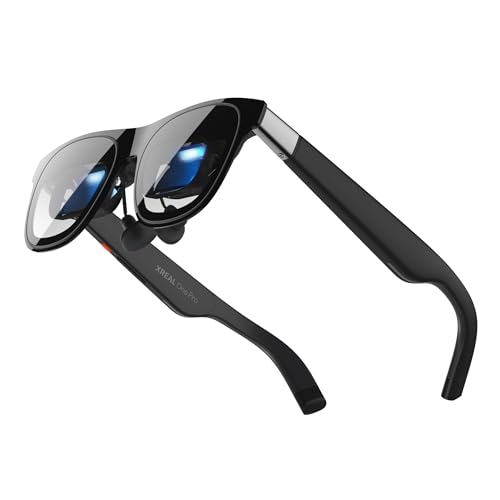
The XREAL One Pro represents an ambitious evolution in wearable display hardware, combining Sony 0.55-inch Micro-OLED panels, a proprietary X1 spatial computing processor, and custom X-Prism projection optics into an 87-gram frame. Unlike full standalone virtual reality headsets that carry internal batteries and bulky thermal management fans, these x real one pro glasses act as a wearable spatial monitor powered entirely by your host hardware. While the visual fidelity and smooth 120Hz refresh rate provide a compelling monitor replacement for mobile computing, the device relies on a delicate physical architecture and strict host system requirements that buyers must evaluate carefully before committing.
This headset suits frequent commuters, productivity-oriented laptop users, and handheld gamers who want an expansive 171-inch virtual screen without carrying a portable monitor. However, casual shoppers expecting a durable outdoor wearable, a standalone wireless computing platform, or effortless compatibility with smartphones lacking DisplayPort video output will find the hardware restrictive. Understanding these limitations is critical to determining whether the system fits your daily workflow or introduces frustrating technical bottlenecks.
XREAL One Pro spec sheet
| Display Panel | Sony 0.55-inch Micro-OLED |
|---|---|
| Resolution & Refresh Rate | Full HD (1080p) per eye at 120Hz |
| Field of View | 57 Degrees (Optic Engine 4.0) |
| Apparent Screen Size | 171 inches (starting baseline) |
| Peak Brightness | Up to 700 nits |
| Spatial Tracking | Native 3DoF via X1 Chip (3ms latency) |
| Audio System | Sound by Bose with custom sound chambers |
| Sizing Architecture | Dual IPD: Medium (57–66mm) and Large (66–75mm) |
| Ingress Protection | Not Water Resistant |
| Weight | 87 grams |
Quoted from the product listing. We did not measure these figures.
01Optic Engine Performance and Visual Clarity
Evaluating the xreal one pro optics begins with understanding how birdbath and prism-style projection systems operate under real-world scrutiny. The One Pro implements Optic Engine 4.0 with X-Prism optics, pairing Sony 0.55-inch Micro-OLED display units with precision-angled semi-transparent surfaces. This hardware configuration yields an industry-competitive 57-degree field of view (FOV), projecting what appears as a massive 171-inch spatial screen in your field of vision. When examining the x real one pro glasses specs, the leap to a native 120Hz refresh rate stands out immediately, eliminating the motion judder and micro-stuttering that frequently plague lower-tier wearable displays during rapid scrolling or high-frame-rate gaming.
Brightness management is another area where the optical stack performs admirably, reaching peak luminance levels up to 700 nits. To combat ambient light washouts that ruin contrast on see-through displays, the lenses feature electrochromic dimming. This electronic tinting layer darkens the outer glass electronically at the touch of a button, allowing you to transition from an ambient see-through augmented workspace to an opaque movie-watching environment. Contrast levels benefit significantly from the underlying Micro-OLED technology, maintaining deep black levels that traditional LCD wearable displays fail to replicate, an observation consistent with baseline visual benchmarks established in our earlier xreal 1 pro analysis.
However, optical physics dictates undeniable compromises that prospective buyers must acknowledge. Because the projected image enters your eyes through reflected optical prisms, edge-to-edge sharpness relies entirely on how squarely the lenses sit relative to your pupils. If the frame slides slightly down the bridge of your nose, peripheral text can exhibit chromatic distortion, slight blurring, or clipping along the outer interface borders. The inclusion of a REAL 3D toggle lets users transform standard media into stereoscopic depth formats instantly, but achieving clean stereoscopic separation requires keeping the optics rigidly positioned within the optical sweet spot.
02Hardware Durability and Ingress Vulnerabilities
Examining xreal one pro durability reveals an undeniable tension between extreme weight reduction and physical ruggedness. Tipping the scales at an ultra-light 87 grams, the glasses use silicone and rubber elements along the temple sections to maintain balance without applying excessive clamping pressure. The internal structural chassis incorporates spring hinges and three-stage adjustable arms designed to endure daily donning and doffing. Despite these mechanical reinforcements, the rectangular frame remains a delicate optical assembly packed with Micro-OLED silicon, precision glass prisms, and micro-ribbon cables running through moving joints.
The single most glaring technical hazard listed in the product specifications is the ingress protection rating: the XREAL One Pro is explicitly Not Water Resistant. This complete absence of moisture sealing makes the glasses highly susceptible to liquid damage from sudden rain showers, accidental desktop beverage spills, or heavy exercise perspiration dripping into the upper brow vents. Because electrical and optical components sit mere millimeters away from the casing seams, exposing the frame to water hazards poses an immediate risk of short-circuiting the X1 spatial chip or permanently clouding the interior prism surfaces.
Mechanical wear on the connection interface represents another category of common xreal one pro problems. Because the glasses lack an internal battery to keep weight down, they depend completely on an uninterrupted physical USB-C tether to draw power and video signals from your host machine. Repeatedly plugging and unplugging the cable into the temple arm introduces mechanical leverage against the port. Dropping the tethered host device or abruptly snagging the cable on a desk armrest can bend the internal connector pins, turning a high-end visual device into an unresponsive paperweight if cable strain is left unmanaged.
03DisplayPort Compatibility and Host Device Demands
Before purchasing, buyers must master the intricacies of xreal one pro compatibility. The glasses operate via a USB-C interface, but a physical USB-C port alone does not guarantee functionality. The sending device must natively support DisplayPort Alternate Mode (DP Alt Mode) over its USB-C port to output audio and video. While modern devices like the iPhone 15, iPhone 16, current iPad lines, and modern Windows laptops transmit video effortlessly, older smartphones and budget tablets equipped with USB-C 2.0 data-only ports cannot drive the display without specialized external conversion hardware that the listing does not include.
For mobile professionals seeking a multi-monitor productivity environment on the road, tethering the headset to a high-performance portable workstation like a MacBook Pro 16GB RAM unlocks a focused virtual canvas without the bulk of physical monitors. The proprietary on-board operating system integrates cleanly across both Android and iOS ecosystems, supporting built-in system functions for phone calls, music playback, and media recording. Because the host system supplies all operational power, users should anticipate accelerated battery drainage on their host laptops and mobile devices when outputting a 120Hz FHD signal continuously.
Gamers investing in the xreal one pro for steam deck or ROG Ally setups will discover one of the hardware’s most satisfying use cases. When plugged directly into a Steam Deck, the glasses immediately seize the display stream, projecting a crisp 120Hz canvas that relieves neck strain during long travel sessions. Physical buttons located directly on the frame give quick access to brightness adjustments, display modes, and viewing distances without forcing players to pause their game or dive into software menus. Handheld gamers must remember, however, that powering dual Micro-OLED displays at high brightness noticeably shortens the handheld console’s remaining battery runtime.
04Spatial Tracking Latency and Audio Architecture
A core highlight of the hardware is the implementation of the self-developed X1 spatial computing chip, which introduces native xreal one pro 3dof tracking. Traditional display glasses merely mirror your screen in a static, head-locked orientation, forcing the virtual window to follow every twitch and tilt of your head like a screen glued to your forehead. The One Pro circumvents this visual fatigue by calculating 3DoF (Degrees of Freedom) tracking directly on the internal X1 processor with an ultra-low motion-to-photon latency of 3 milliseconds, allowing the virtual 171-inch screen to remain anchored in rotational space as you pan your head.
While native 3DoF tracking handles rotational axis movements—pitch, yaw, and roll—it does not account for translational body movements like leaning forward, taking steps backward, or walking across a room. For true positional spatial anchoring where the screen stays pinned to an exact coordinate in physical space, the glasses require pairing with the optional XREAL Eye accessory to unlock full 6DoF tracking. Buyers who expect room-scale mixed reality right out of the box should recognize that 6DoF tracking is not built directly into the standard frame architecture and requires supplementary add-on hardware.
Acoustic performance is delivered via an integrated sound chamber design labeled as Sound by Bose. Rather than forcing users to wear supplementary wireless earbuds, the temple pieces house dedicated acoustic transducers engineered by Bose to fire sound downward toward your ear canals. The audio separation remains crisp for spoken dialogue, gaming cues, and casual music playback. Nevertheless, because these are open-ear speakers rather than sealed headphones, private conversations or loud game audio will inevitably bleed into quiet environments, meaning nearby colleagues or passengers on an airplane will hear your audio output if the volume is pushed to maximum.
05Ergonomic Architecture and Dual IPD Sizing
A frequent downfall of wearable optical displays is the assumption that one frame size fits all human faces. XREAL addresses this optical alignment challenge through xreal one pro dual ipd sizing. The glasses are manufactured in two distinct physical chassis configurations: Size Medium covers interpupillary distances from 57mm to 66mm, while Size Large accommodates users with an IPD spanning 66mm to 75mm. Together, these two size brackets cover roughly 95 percent of adult users, drastically reducing eye strain by ensuring the Micro-OLED focal centers align correctly with the wearer’s natural pupil spacing.
Physical personalization extends down to the facial interface contact points. The glasses ship with zero-pressure nose pads available in three interchangeable sizes, accompanied by three-stage adjustable arms that let wearers alter the tilt angle against their cheekbones. Achieving the correct temple tilt is essential not merely for physical comfort, but to prevent the bottom rim of the rectangular frame from cutting off the lower edges of the projected virtual screen. The spring hinges provide ample flex, preventing the temples from pinching wider head profiles during extended viewing sessions.
When operating tethered hardware in transit, mechanical slips remain an ever-present risk. If your mobile phone slips from your grasp or falls off a train tray table, the tension on the physical USB-C cable will violently wrench the glasses off your face. Users who pair the glasses with high-end mobile flagships often take structural precautions with rugged accessories, similar to the shock-absorbing strategies explored in our Phone 18 Pro Max protective case evaluation, ensuring that a tethered drop does not destroy both the host phone and the optical frame simultaneously.
06Warranty Realities and Long-Term Ownership
Navigating xreal one pro warranty support requires realistic expectations regarding post-purchase boutique hardware maintenance. The retail product listing provides technical parameters regarding dimensions, display technology, and processor silicon, but the listing does not specify precise warranty durations, regional repair turnarounds, or accidental damage coverage policies. For consumers accustomed to immediate walk-in retail replacements from legacy technology giants, dealing with specialized augmented reality manufacturers often involves remote support ticketing, international shipping logistics, and strict diagnostic criteria before replacement parts are issued.
The repairability score of the One Pro is effectively non-existent for everyday consumers. Because the frame integrates an electrochromic glass layer, dual Sony 0.55-inch Micro-OLED displays, the proprietary X1 processing silicon, and delicate Bose-tuned micro-acoustics into an 87-gram shell, there are zero user-serviceable components inside. If an internal ribbon cable tears within the folding temple hinge or an electrochromic layer fails to transition, the hardware cannot be serviced by local third-party electronics repair shops. Protection must come entirely from gentle handling and storing the glasses in a rigid protective case when not in active use.
When asking is x real one pro glasses worth it, buyers must weigh visual utility directly against hardware fragility. If your daily life revolves around mobile coding, long-haul travel, or handheld gaming where a 120Hz display transforms your posture and productivity, the engineering justifies the purchase. Conversely, if you require a device that can withstand gym workouts, humid environments, or rough handling without constant mindfulness of cable strain and moisture exposure, the ownership risks multiply quickly.
The verdict
XREAL One Pro
8.8/10
Buyer score
Very positive
Average star rating left by Amazon buyers, doubled to a 10-point scale. It is not a score we gave the product.
The XREAL One Pro stands out as an impressive piece of wearable visual engineering, offering brilliant Sony Micro-OLED panels, responsive 120Hz refresh rates, and smooth 3DoF spatial anchoring powered by internal silicon. By splitting the hardware into two dedicated IPD sizes and integrating electrochromic dimming, XREAL has resolved many of the optical misalignments and glare hurdles that plagued earlier generations of screen-mirroring eyewear. For gamers tethered to a Steam Deck or remote workers seeking an expansive screen on a flight, the visual experience is both functional and genuinely immersive.
Nevertheless, prospective buyers must enter the transaction with eyes wide open regarding the hardware’s structural boundaries. The total absence of water resistance demands strict indoor discipline, while the permanent tethered USB-C connection exposes both the glasses and your host device to physical strain hazards. If you treat the One Pro as a precision optical instrument rather than an indestructible consumer gadget, it delivers an exceptional personal theater and mobile workstation that justifies its presence in a modern tech arsenal.
Pros
- Sony Micro-OLED with 120Hz refresh rate
- Hardware-level native 3DoF tracking chip
- Dual IPD sizing options for precise optical fit
- Electrochromic dimming reaching up to 700 nits
- Tuned sound chambers by Bose engineers
Cons
- Completely lacks water resistance
- Tethered USB-C cable creates physical strain points
- Requires host devices with DisplayPort alternate mode
- 6DoF tracking requires purchasing separate XREAL Eye
Buy it if
- You travel frequently and want a massive 171-inch 120Hz FHD virtual display powered directly by your laptop or handheld gaming console.
- Your interpupillary distance fits cleanly into either the Medium (57–66mm) or Large (66–75mm) sizing brackets for optimal optical clarity.
- You prioritize onboard spatial processing, benefiting from the X1 chip’s native 3DoF tracking without taxing your host computer’s processor.
- You primarily operate in controlled indoor spaces where electrochromic dimming and high-contrast Micro-OLED optics provide ideal desktop replacement utility.
Skip it if
- You need a rugged outdoor wearable capable of surviving rain, heavy sweat, or unpredictable moisture exposure.
- Your primary phone or portable playback device lacks a USB-C port equipped with DisplayPort Alternate Mode video output.
- You expect a completely untethered, standalone computing headset with an integrated battery and out-of-the-box 6DoF room tracking.
See it on AmazonAffiliate link. Price and stock change at Amazon, not here.
Questions buyers ask
Is the XREAL One Pro water resistant?
No, the product listing explicitly specifies that the XREAL One Pro is Not Water Resistant. The frame lacks ingress protection gaskets, meaning exposure to rain, high humidity, liquid spills, or heavy exercise sweat can penetrate the optical chambers and permanently ruin the internal electronics.
Does the XREAL One Pro have an internal battery?
The glasses do not contain a standalone battery pack, which is why the frame maintains an ultra-lightweight specification of 87 grams. The device draws all operational power directly through its USB-C connection from the host phone, handheld console, or laptop.
Can the XREAL One Pro track 6DoF movement without accessories?
The glasses provide native 3DoF (rotational) tracking out of the box using the integrated X1 spatial computing chip. To achieve full 6DoF spatial anchoring that tracks physical forward, backward, and lateral body movements in a room, you must pair the glasses with the optional XREAL Eye accessory.
How do I know which IPD size to purchase?
The XREAL One Pro offers a dual IPD design split into two specific sizing categories: Size Medium is built for interpupillary distances between 57mm and 66mm, while Size Large covers measurements from 66mm to 75mm. Selecting the correct size ensures your pupils align with the optical focal sweet spot of the Micro-OLED panels.
Will the XREAL One Pro work with any Android or iOS device?
The glasses are compatible with Android and iOS devices, but only if the specific host hardware supports video output via DisplayPort Alternate Mode over its USB-C port, such as the iPhone 15, iPhone 16, or compatible DP-enabled Android phones. Devices with data-only or charge-only USB-C ports cannot transmit video to the glasses.
How this review was put together
- Specs are quoted from the Amazon listing, not measured in a lab.
- The score is the average star rating left by Amazon buyers, doubled to a 10-point scale.
- Prices were read from the listing when this page was last built and move without notice.
- Buyer quotes are reproduced word for word, with the name and date shown.
199 reviews · 1,445 rated products · 87 brands tracked
We earn a commission when you buy through our Amazon links. That never changes a score, because we do not set the scores.