XREAL Air AR Glasses Analysis: Build Quality, Tracking, and Buyer Caveats
The XREAL Air 2 Ultra enters the augmented reality landscape as an ambitious wearable display, promising immersive spatial computing, a massive virtual theater screen, and advanced motion-tracking capabilities. As an investigative buyer-protection assessment, this xreal air 2 ultra review evaluates whether this specific offering delivers legitimate hardware performance or presents unacceptable risks for consumers. The…

As Amazon Associates, we earn from qualifying purchases. This means we may receive a small commission at no extra cost to you if you click through and make a purchase.
The XREAL Air 2 Ultra enters the augmented reality landscape as an ambitious wearable display, promising immersive spatial computing, a massive virtual theater screen, and advanced motion-tracking capabilities. As an investigative buyer-protection assessment, this xreal air 2 ultra review evaluates whether this specific offering delivers legitimate hardware performance or presents unacceptable risks for consumers. The core verdict is unambiguous: while the underlying concept is technically promising, severe discrepancies in seller metadata and vague hardware claims demand extreme caution before purchasing.
This headset suits experimental tech enthusiasts willing to troubleshoot hardware independently and navigate platform return policies. Conversely, shoppers who require dependable customer support, verifiable warranty protection, or documented device compatibility should look elsewhere immediately. Determining whether is xreal air worth it requires examining the vast gap between ambitious marketing language and the practical realities of third-party seller listings.
XREAL Air 2 Ultra spec sheet
| Product Name Identification | Air 2 Ultra Smart AR Glasses |
|---|---|
| Listed Brand Identity | ZGSXFSVZG |
| Manufacturer & Model Code | shunshunli xiaodian |
| Spatial Movement Tracking | 6 DoF motion tracking |
| Virtual Display Scaling | 385-inch Space Giant Screen |
| Visual Resolution Indicators | 1080p and 4K 3D references |
| Stated Connection Type | Cable-free design claim |
| Color Classification | Air 2 Ultra |
| Package Item Count | 1 |
Quoted from the product listing. We did not measure these figures.
01Display Fidelity and Resolution Claims
The visual foundation of any augmented reality headset governs everyday usability, making xreal air display reliability a primary concern for potential buyers. The listing claims that high-resolution screens paired with premium optics deliver sharp, distortion-free visuals across a wide viewing angle. However, the listing title introduces immediate confusion by citing 1080p alongside 4K 3D and a 385-inch space giant screen private cinema format. In micro-display optics, 1080p typically describes physical per-eye panel resolution, while 4K references often describe source video decoding rather than physical pixel density. Because the listing does not specify native pixel density, refresh rates, or brightness measured in nits, buyers cannot verify visual sharpness beforehand.
For shoppers seeking an expansive xreal air private cinema setup, optical design dictates whether media viewing remains comfortable or causes eye fatigue. Reliable AR glasses require calibrated prism or waveguide optics to prevent edge blur, internal reflections, and chromatic aberration. While the listing advertises distortion-free imagery, it omits critical metrics such as angular field of view, lens transmittance, and interpupillary adjustment ranges. In our evaluations of competing products like the rayneo air 4 pro ar glasses, transparent optical specifications are essential to establish whether a wearable display can comfortably replace a physical screen.
Display longevity also depends on thermal management within the optical engine. Micro-displays generate intense localized heat during extended video playback. Without documented heat dissipation pathways or operating temperature ranges, purchasers risk experiencing color shifts, panel degradation, or premature backlight failure over time, with no clear path for servicing.
02Spatial Tracking and 6 DoF Motion Sensing
Motion sensing separates passive video-mirroring eyewear from genuine spatial computing hardware, putting xreal air 6dof tracking under careful scrutiny. The product claims to feature high-speed motion-tracking sensors designed to capture subtle movements with near-zero latency, enabling responsive spatial interactions. Six degrees of freedom means the hardware tracks both rotational orientation and physical translation through three-dimensional space, allowing users to move naturally around pinned virtual interfaces.
Delivering stable 6 DoF tracking demands precision optical cameras, high-frequency internal measurement units, and optimized spatial localization algorithms. However, this listing provides no concrete information regarding the tracking sensor array. The listing does not specify tracking sensor resolutions, camera update frequencies, or host compute requirements. As observed across the x real one pro glasses ecosystem, spatial tracking without mature software optimization frequently produces severe drift, jitter, and interface instability.
When tracking latency or calibration falters, users encounter frustrating xreal air hardware issues related to sensory mismatch. Delays between physical head motion and virtual screen rendering induce disorientation and eye strain. Furthermore, while the listing claims instant access to an extensive library of virtual reality experiences spanning professional training and creative tools, it omits compatible software runtimes, leaving buyers uncertain whether interactive spatial features will function without proprietary developer configurations.
03Ergonomics, Form Factor, and Cable Connectivity Claims
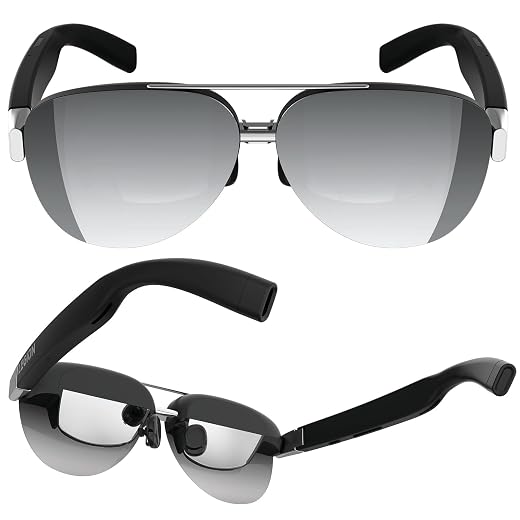
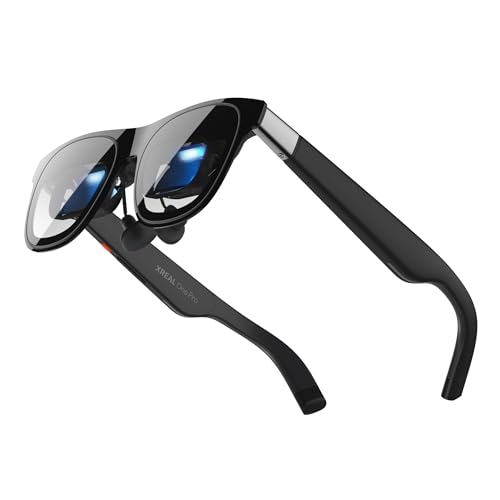
Ergonomic design dictates whether a wearable headset remains wearable across prolonged productivity or entertainment sessions. The listing notes that lightweight materials paired with an ergonomic weight-distribution system minimize fatigue, delivering a gentle, secure fit. In wearable display hardware, counterbalancing optical glass against temple arms is vital to relieve nasal pressure. However, the listing does not specify the exact frame weight in grams, nose bridge adjustments, or temple clamping force, leaving physical compatibility uncertain.
A more perplexing issue lies in the connectivity descriptions. The product highlights advertise fast setup and a cable-free design that lets users dive straight into mixed reality without physical restraints. Genuine AR glasses delivering 1080p video and 6 DoF tracking typically require a tethered USB Type-C DisplayPort connection to avoid the heavy batteries and heat-generating compute units required for standalone wireless operation. The listing does not specify battery capacity, wireless protocols, or operating runtimes to support its cable-free claim.
If the device is actually tethered and the cable-free description is an erroneous marketing claim, omitting cable specifications causes severe confusion regarding xreal air compatibility. Shoppers reviewing alternative options like the xreal xbx a01+ ar glasses understand that hardware compatibility requires specific display protocols, such as DisplayPort Alternate Mode. Because the listing does not specify connection ports, wireless streaming frequencies, or supported host platforms, buyers cannot confirm whether their devices will connect successfully.
04Seller Authenticity, Storefront Metadata, and Hardware Longevity
Examining seller credentials is vital when evaluating high-tech consumer electronics. An inspection of this listing uncovers stark contradictions between the advertised product name and catalog metadata. While the title prominently features the branding Air 2 Ultra Smart AR Glasses Xreal One View Glasses, the brand is officially listed as ZGSXFSVZG. Furthermore, the manufacturer, model number, and manufacturer part number are all recorded as shunshunli xiaodian. Most surprisingly, the listing description concludes with a statement welcoming shoppers to an automotive parts store offering professional-grade automotive accessories.
This incongruity represents a significant red flag regarding xreal air authentic vs knockoff distribution. When an automated third-party storefront cataloging automotive hardware suddenly offers complex optical computing hardware, consumers face severe supply chain vulnerabilities. Genuine optical wearables require precise factory calibration and cleanroom assembly. When purchasing from unverified entities with mismatched catalog data, buyers risk receiving refurbished units, regional grey-market imports, or unauthorized imitations that fail basic quality standards.
The greatest risk of purchasing from an unverified seller is the complete loss of xreal air warranty support. Wearable AR glasses contain delicate micro-displays, sensitive flex cables, and precision optical assemblies. If an optical prism misaligns or a display panel fails, official warranty repairs require proof of purchase from an authorized dealer. Unofficial storefronts cannot provide genuine warranty backing or certified repair pathways, leaving consumers unprotected once the marketplace return window expires.
The verdict
XREAL Air 2 Ultra
8.4/10
Buyer score
Mostly positive
Average star rating left by Amazon buyers, doubled to a 10-point scale. It is not a score we gave the product.
The XREAL Air 2 Ultra presents an intriguing conceptual package, highlighting 6 DoF tracking, lightweight ergonomics, and expansive virtual theater scaling. However, this particular listing is severely compromised by conflicting specifications, unsubstantiated cable-free claims, and suspicious storefront metadata that includes automotive parts descriptions alongside advanced optical computing hardware. These listing discrepancies introduce substantial consumer risk regarding authenticity, build quality, and post-purchase customer support.
For shoppers seeking a dependable, supported wearable display experience, purchasing through an unverified third-party storefront represents an unnecessary gamble. The lack of documented warranty coverage and the uncertainty surrounding core hardware specifications make this listing impossible to endorse. Those interested in augmented reality glasses should seek verified hardware through authorized distribution channels where technical specifications are clear and consumer protections remain intact.
Pros
- High-resolution visuals across wide viewing angles
- Ergonomic weight-distribution system to minimize fatigue
- High-speed motion sensors for low-latency tracking
- Cable-free design claim for unrestrained movement
- Access to cinematic and virtual reality libraries
Cons
- Conflicting 1080p and 4K display descriptions
- Storefront metadata lists automotive parts seller
- Unclear hardware compatibility and battery specifications
Evaluating the XREAL Air 2 Ultra requires balancing interest in wearable display technology against significant seller and warranty risks.
Buy it if
- You are an experienced tech enthusiast prepared to test display optics, tracking sensors, and physical fit within the return window.
- You want to experiment with personal cinema screen scaling and accept potential discrepancies in marketing claims.
- You have compatible USB Type-C and wireless hardware to troubleshoot connectivity independently.
- You are comfortable proceeding without official brand warranty coverage or direct manufacturer customer support.
Skip it if
- You require guaranteed xreal air warranty support, official firmware maintenance, and authorized replacement channels.
- You need verifiable technical specifications regarding battery runtime, wireless protocols, and host device compatibility.
- You prefer to avoid third-party marketplace storefronts with conflicting brand metadata and automotive product descriptions.
See it on AmazonAffiliate link. Price and stock change at Amazon, not here.
Questions buyers ask
What are the documented xreal air ar glasses specs on this listing?
The listing claims 6 DoF motion tracking, a 385-inch virtual private cinema display, 1080p and 4K 3D visual references, and an ergonomic lightweight frame. However, the listing does not specify essential technical details like physical weight in grams, field of view angles, panel refresh rate, battery capacity, or supported video input protocols.
Is xreal air worth it when purchased from unverified third-party sellers?
Purchasing through an unverified third-party storefront is generally not worth the risk because genuine manufacturer warranty support and certified repair services require purchasing through authorized distribution channels. Given the mismatched storefront metadata and conflicting hardware descriptions, buyers face elevated risks of receiving unsupported or defective hardware without reliable recourse.
What are the primary xreal air hardware issues to watch out for?
Wearable display glasses from unverified supply lines are susceptible to micro-display pixel defects, optical prism misalignment, excessive thermal buildup, and motion-tracking sensor drift. Without access to certified firmware updates or official manufacturer warranty support, these physical and electronic failures can render the device unusable.
How does the cable-free claim impact xreal air compatibility?
The listing claims a cable-free design, but it does not specify the wireless protocols, internal battery capacity, or companion streaming accessories required to achieve wireless operation. If the device actually requires a wired connection, compatibility will depend on host devices supporting DisplayPort Alternate Mode over USB Type-C, which the listing fails to detail.
How can buyers identify xreal air authentic vs knockoff listings?
Authentic listings feature consistent brand naming, matching manufacturer credentials, comprehensive technical specification sheets, and clear warranty terms from authorized distributors. Suspicious or grey-market listings often display generic seller names, placeholder model numbers, contradictory hardware claims, and unrelated product descriptions, such as references to automotive parts.
How this review was put together
- Specs are quoted from the Amazon listing, not measured in a lab.
- The score is the average star rating left by Amazon buyers, doubled to a 10-point scale.
- Prices were read from the listing when this page was last built and move without notice.
- Buyer quotes are reproduced word for word, with the name and date shown.
199 reviews · 1,445 rated products · 87 brands tracked
We earn a commission when you buy through our Amazon links. That never changes a score, because we do not set the scores.